


Graph Database: Revolutionizing Data Management and Relationships
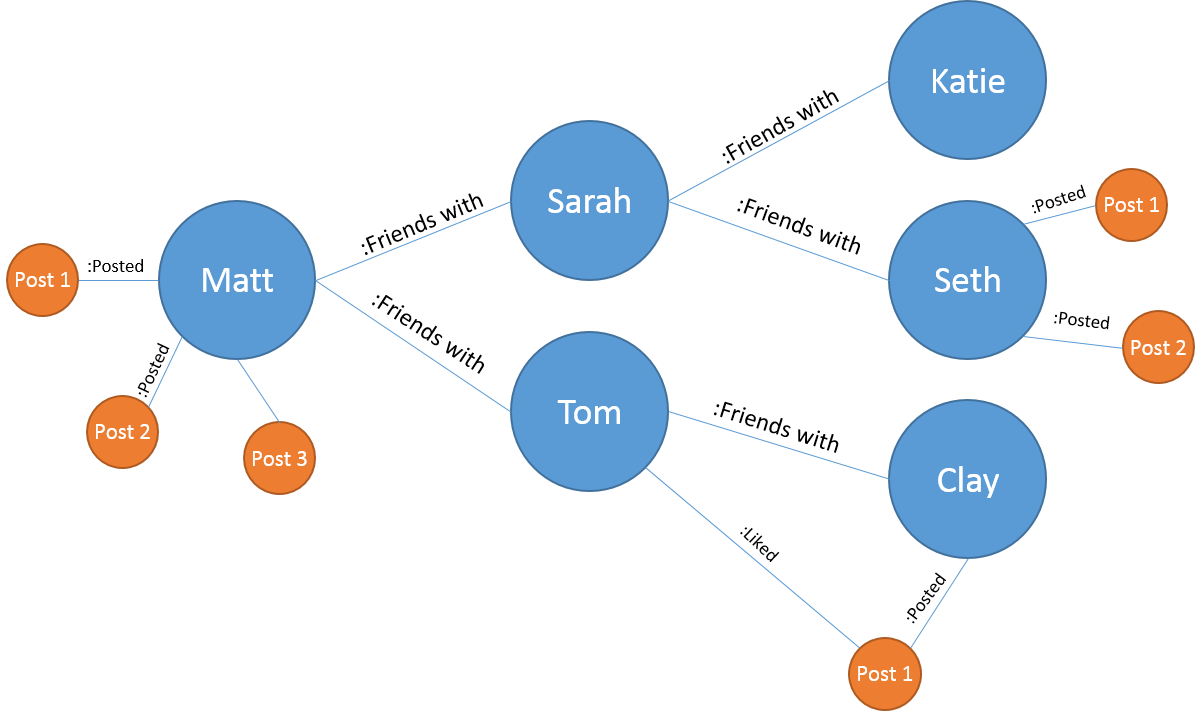
In the era of big data, traditional relational databases often struggle to efficiently manage complex, interconnected information. This is where graph databases come into play, offering a dynamic and intuitive way to store, retrieve, and analyze data. Unlike relational databases that rely on tables and rows, graph databases utilize nodes, edges, and properties to represent data and their interconnections, making them ideal for applications where relationships are as important as the data itself.
A graph database consists of nodes, representing entities such as people, products, or locations, and edges, which define the relationships between these nodes. Each node and edge can have multiple properties to store relevant information. This structure enables rapid querying of complex relationships, often outperforming traditional databases in scenarios like social networks, recommendation engines, fraud detection, and network analysis. For example, platforms like Facebook or LinkedIn leverage graph databases to map social connections and suggest friends or professional contacts based on multiple degrees of separation.
One of the key advantages of graph databases is flexibility. They can easily adapt to evolving data models without requiring extensive schema modifications, unlike relational databases where changes can be cumbersome and time-consuming. This flexibility is particularly useful for modern applications that deal with semi-structured or unstructured data, such as IoT devices, real-time analytics, or knowledge graphs in artificial intelligence.
Moreover, performance efficiency is another significant benefit. Graph databases are optimized for traversing relationships, allowing complex queries that would require multiple JOIN operations in relational databases to be executed much faster. This makes them suitable for scenarios that demand real-time insights, like detecting suspicious transactions in banking or identifying critical nodes in supply chain networks.
Several graph database technologies have gained prominence, including Neo4j, Amazon Neptune, Microsoft Azure Cosmos DB, and OrientDB. These platforms provide advanced query languages such as Cypher or Gremlin, which are specifically designed to navigate and manipulate graph structures efficiently. Organizations can leverage these tools to unlock deeper insights from their data, uncover hidden patterns, and make informed decisions that were previously challenging to achieve with traditional database systems.
Despite their advantages, graph databases are not a one-size-fits-all solution. They are most effective in environments where relationships between data points are crucial. For simple transactional data or scenarios with minimal relationships, relational or NoSQL databases may still be more suitable. However, as data complexity grows and the need to understand interconnections intensifies, graph databases are rapidly becoming an essential component of modern data infrastructure.
Source - https://www.marketresearchfuture.com/reports/graph-database-market-21397
Graph databases represent a transformative approach to data management, emphasizing the relationships and connections that drive real-world insights. By offering flexibility, performance, and an intuitive representation of complex networks, they empower businesses and developers to navigate the increasingly interconnected digital landscape with efficiency and precision. As organizations continue to generate vast amounts of interconnected data, the adoption of graph databases is expected to rise, reshaping how we perceive and utilize data relationships.
 Dutch
Dutch
 English
 Arabic
 French
 Spanish
 Portuguese
 Deutsch
 Turkish
 Italiano
 Russian
 Romaian
 Portuguese (Brazil)
 Greek
Greek
