


The Speed of Light: An In-depth Introduction to the Algorithm Trading Industry
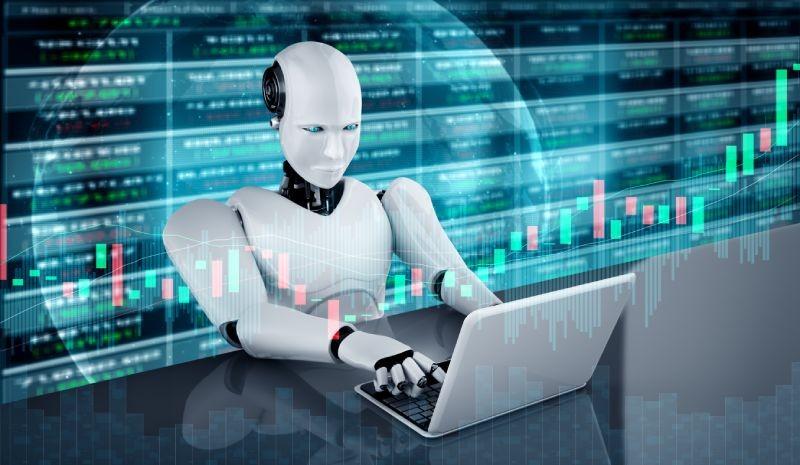
In the modern global financial markets, where fortunes can be made or lost in microseconds, human speed and intuition are no longer enough to compete. This new reality has given rise to the sophisticated, high-stakes, and transformative Algorithm Trading industry. This industry, also known as "algo trading" or "black-box trading," is a specialized sector of finance that uses complex computer programs and quantitative models to execute trading orders in financial markets at speeds and volumes that are impossible for a human trader to achieve. The fundamental purpose of this industry is to automate the entire trading process, from identifying opportunities and making decisions to executing orders and managing risk, based on a pre-defined set of rules, mathematical models, and statistical arbitrage strategies. By removing human emotion and leveraging the power of computational analysis and speed, this industry aims to capture fleeting market inefficiencies, minimize transaction costs, and manage large orders with minimal market impact, making it the dominant force in today's electronic financial markets. It is the invisible engine that drives a vast portion of the daily trading volume on stock exchanges around the world.
The ecosystem of the algorithm trading industry is a highly specialized and technically demanding network of financial institutions, technology vendors, and infrastructure providers. At its core are the users of the technology: hedge funds (particularly quantitative or "quant" funds), proprietary trading firms, investment banks, and asset managers. These are the firms that develop the trading strategies and deploy the algorithms to generate profits. A second crucial layer consists of the software and platform vendors. This includes large, established providers like Virtu Financial, Citadel Securities, and Bloomberg, who offer sophisticated trading platforms, market data feeds, and execution algorithms. A third layer is comprised of the essential infrastructure providers. This includes the stock exchanges themselves (like the NYSE and Nasdaq), which provide the co-location services that allow trading firms to place their servers directly inside the exchange's data center to minimize latency. It also includes specialized network providers that offer ultra-low-latency fiber optic or microwave networks connecting different financial centers. Finally, a vast ecosystem of consultants, quantitative analysts ("quants"), and software engineers provides the highly specialized human talent required to design, build, and maintain these complex trading systems.
The technological foundation of the algorithm trading industry is built upon a sophisticated architecture designed for one primary purpose: speed. The entire technology stack, from the network to the server to the software, is optimized to reduce latency—the time it takes for information to travel and for an order to be executed—down to the level of microseconds or even nanoseconds. The process begins with the ingestion of massive volumes of real-time market data from multiple exchanges. This data is processed by the trading algorithm, which is a computer program containing the firm's proprietary trading strategy. This strategy could be based on a wide range of models, from simple statistical arbitrage between two related stocks to complex machine learning models that try to predict short-term price movements. When the algorithm identifies a trading opportunity that meets its pre-defined criteria, it automatically generates an order. This order is then sent through a high-speed execution system to the exchange. The most advanced form of this is High-Frequency Trading (HFT), which involves making a huge number of trades in fractions of a second to profit from tiny price discrepancies.
The overall impact of the algorithm trading industry on the financial markets is profound and a subject of intense debate. On one hand, proponents argue that it has dramatically improved market efficiency and liquidity. By constantly searching for and arbitraging away small price discrepancies, algorithms help to ensure that prices are more accurate. The massive volume of orders generated by HFT firms provides liquidity, meaning it is easier for all investors, including retail investors, to buy or sell a stock at any given time without significantly impacting its price. This has led to a dramatic reduction in the "bid-ask spread," which is a direct cost to all investors. On the other hand, critics raise concerns about market stability. The incredible speed of these systems can sometimes lead to or exacerbate "flash crashes," where market prices plummet and recover in a matter of minutes. There are also concerns about fairness, with critics arguing that the speed advantage of HFT firms creates a two-tiered market that is unfair to slower, long-term investors. Regardless of the debate, the dominance of algorithmic trading is an undeniable reality of modern finance.
Explore More Like This in Our Reports:
Sales Enablement Platform Market
 Greek
Greek
 English
 Arabic
 French
 Spanish
 Portuguese
 Deutsch
 Turkish
 Dutch
Dutch
 Italiano
 Russian
 Romaian
 Portuguese (Brazil)
